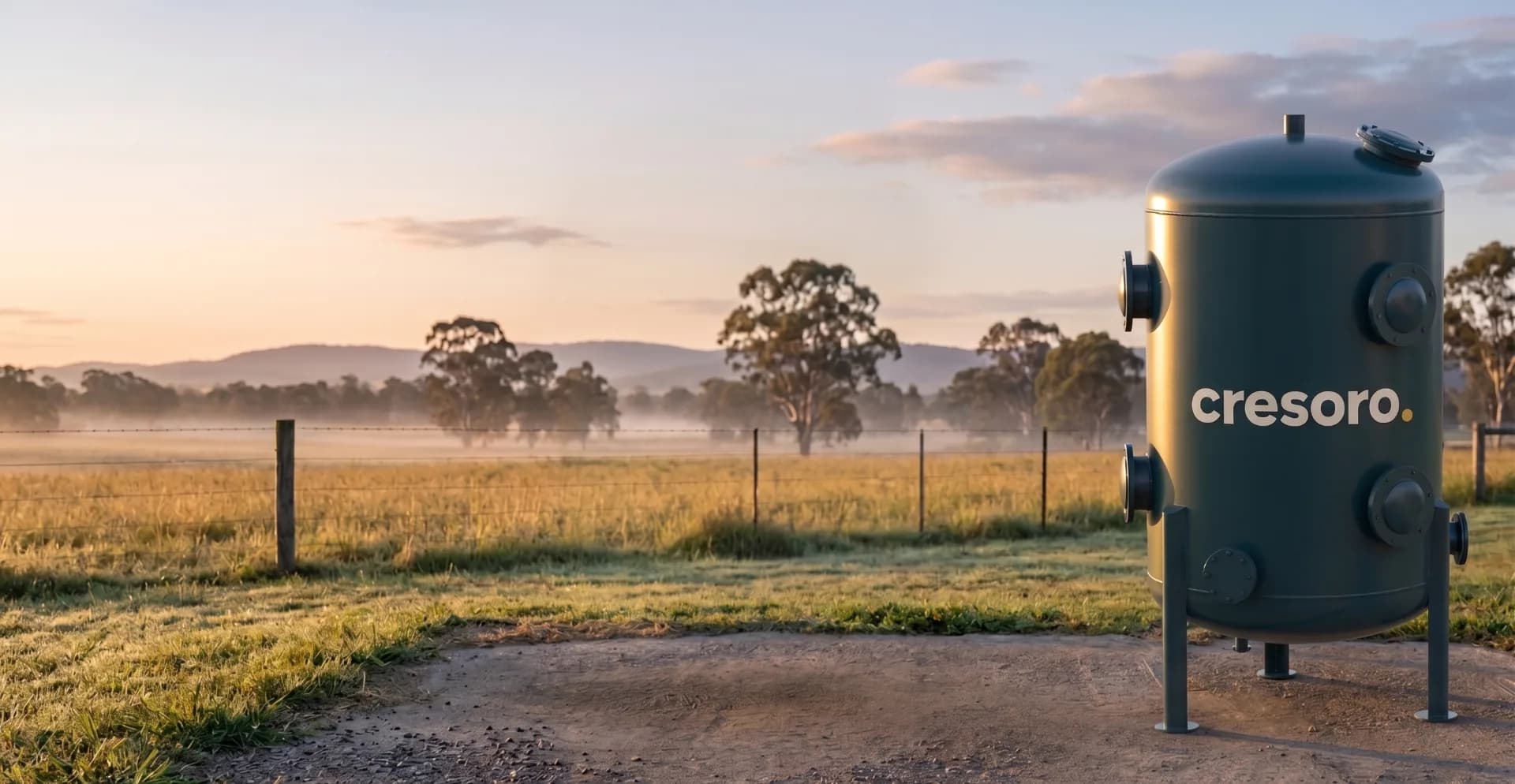
When a Standard Filter Fits, and When You Need One Built Around Your Water
Most of the time, a standard media filter is the right answer. The flow is ordinary, the water is reasonable, the site has room, and a well-made off-the-shelf vessel does the job for years without anyone thinking about it. When that's the situation, buying standard is the sensible call, and anyone who tries to sell you something bespoke you don't need isn't doing you a favour.
But water doesn't always cooperate, and neither do sites. Sometimes the water carries a load or a chemistry that a generic filter isn't configured for. Sometimes the flow rate sits awkwardly between catalogue sizes. Sometimes the space, the access, or the existing pipework won't take a standard unit. When one of those is true, forcing a standard filter to fit is exactly where systems end up underperforming — clogging early, backwashing poorly, or simply not removing what needed removing. That's the situation a custom filter is built for. Not a premium upgrade. A filter designed around the numbers your water and your site actually present.
Here's how we tell the two apart, and how a custom one gets built.
The question that decides it: what's actually in the water?
Everything starts with a water analysis. Not a guess, not "it looks clear" — the actual numbers: suspended solids and turbidity, iron and manganese, hardness, pH, organic load, and the design flow rate the system has to handle. Those figures decide whether a standard filter will do, and if not, what the custom one needs to be.
The single most important thing they determine is filtration velocity — how fast water can be pushed through the media bed and still be properly cleaned. Clean, low-solids water can run fast, around the upper end of the normal range. Dirty, turbid, high-solids water has to run slower, or the contaminants punch straight through the bed instead of being caught. That one number cascades into everything else, and it's where a lot of cheap or mis-specified filters quietly fail: run too fast for the water they're on, they look like filters and don't filter.
From the numbers to the vessel
Once the water analysis sets the safe filtration velocity, the rest of the design follows from it in a fairly unforgiving chain.
The flow rate divided by the filtration velocity gives the filter area the bed needs. The area sets the vessel diameter — and this is why a filter sized for difficult water is often physically larger than one sized for easy water at the same flow: slower velocity means more area means a wider vessel. The media bed height, the media itself, and the backwash system all get sized off that same area. Get the diameter right and the backwash can properly clean the bed; get it wrong and you've built the uncleanable filter we've written about elsewhere.
Then the media gets chosen for the job. Plain sand for straightforward sediment. Layered multimedia — anthracite over sand over garnet — for a heavier or mixed solids load. Catalytic media where iron and manganese are the problem, so the bed oxidises and traps them in one pass. The media isn't interchangeable; it's selected against what the analysis says has to come out of the water.
Only after all of that does the vessel itself get engineered — the pressure rating, the internals, the diffuser arrangement, the connections and access, sized and built to suit the flow, the media, and the site it's going into. The steel is the last decision, not the first. A filter designed the other way round — vessel first, water second — is a filter hoping the water cooperates.
Who a custom filter actually suits
Custom isn't for everyone, and it shouldn't be. It earns its place when:
- The water is difficult. High or variable solids, iron and manganese, or a chemistry that a generic filter isn't configured to handle. The analysis makes the case, not the sales pitch.
- The flow doesn't match a catalogue size. Systems that sit between standard vessel sizes end up either under-filtered or paying for capacity they can't use. Building to the actual flow removes the compromise.
- The site has constraints. Limited space, restricted access, a fixed footprint, or existing pipework and pads that a standard unit won't marry up to. A vessel built to the site avoids the expensive workarounds.
- The duty is demanding. Higher pressures, continuous running, or a process where filtration failure is costly enough that getting it exactly right pays for itself.
If none of those apply — ordinary water, ordinary flow, room to spare — a standard filter is very likely your answer, and we'll say so.
How we work
Our process is deliberately the same order every time, because the order is what keeps it honest. Water analysis first. Then the design flow and the duty. Then the filtration velocity, the sizing, the media, and only then the vessel. Every custom vessel is engineered and manufactured to that specification and rated for the duty it's going into, with the fabrication and coating done to a standard we inspect rather than assume.
What we don't do is start with a filter and talk you into your water fitting it. The water and the site set the specification. Sometimes that specification is a standard filter, and that's a perfectly good outcome. Sometimes it's a vessel that doesn't exist in any catalogue because your situation doesn't either. The job is to know which is which before anyone spends money — and to build the right one properly when it's the second.
If you've got a water analysis, that's the conversation. If you haven't, that's where it starts.