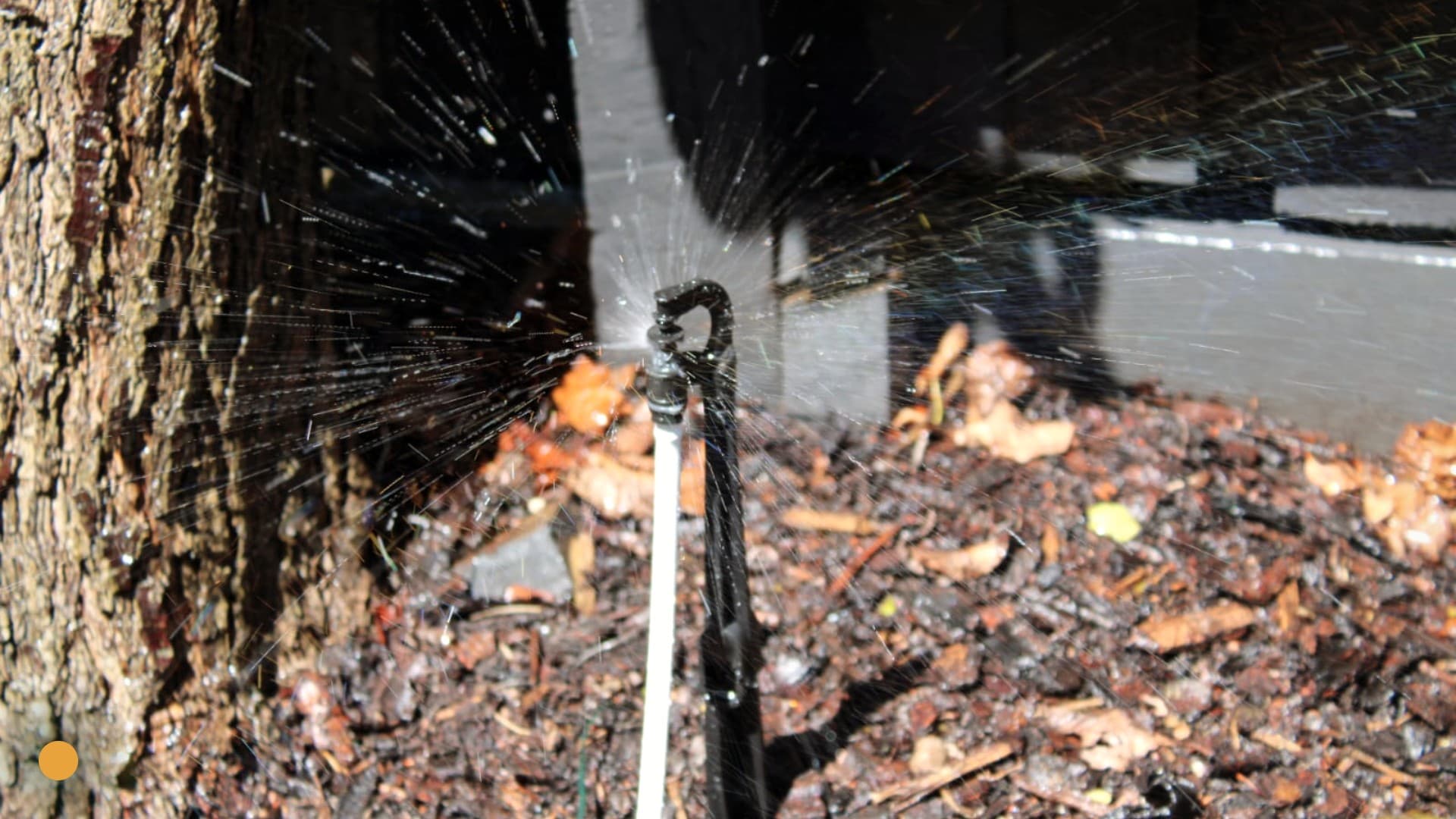
A micro-sprinkler that lays down a beautiful even pattern on a still morning can water like a drunk by mid-afternoon, and the culprit isn't the sprinkler. It's the wind. Micro-sprinklers work by throwing water through the air in fine droplets, and fine droplets are exactly what a breeze picks up and carries off-target. The pattern you designed for stops landing where you planned, the coverage goes patchy, and some of your water never reaches the ground at all. It's a real and predictable cost of spraying water through air, and it's worth understanding before you blame the gear.
Why wind hits micro-sprinklers so hard
Drip doesn't care about wind — the water leaves the emitter straight into the soil. Micro-sprinklers are the opposite: the whole point is to throw water across a wetted circle, which means every drop spends time airborne, exposed to whatever the wind is doing. The finer the droplet, the longer it hangs and the further it drifts. So the same small droplet size that gives a micro-sprinkler its nice even spread on a calm day is the thing that betrays it on a windy one.
Two losses happen at once. Drift carries droplets sideways out of the target zone, so the downwind side gets a double dose and the upwind side goes dry — the even circle becomes a lopsided smear. And evaporation climbs, because little droplets in moving air lose water before they land, especially when it's hot and dry as well as windy. Between them, drift and evaporation are why micro-sprinklers lose more efficiency to weather than drip ever does.
What actually pushes back
You can't beat the wind, but you can take a lot of the tax out of it.
Droplet size. Coarser droplets fall faster and drift less. Some micro-sprinkler nozzles are designed to throw a heavier droplet for exactly this reason. If wind is a regular problem on your site, nozzle selection is the first lever — a finer mist looks gentler but pays a bigger wind tax.
Riser height. The higher the sprinkler sits above the crop, the longer its droplets are exposed to wind before landing, and the more they drift. Keeping the head as low as the crop and the wetting pattern allow shortens that exposure. Height you don't need is drift you didn't have to have.
Timing. This is the big one and it's free. Wind almost always drops in the early morning and overnight, and picks up through the heat of the day. Running micro-sprinklers in the calm window — early morning especially — sidesteps most of the drift and most of the evaporation in one move. It's why the calm-morning watering habit exists, and it costs nothing but scheduling.
Pressure. Running a nozzle above its rated pressure atomises the water into a finer mist than it was designed for, which drifts more. Keeping each sprinkler at its design pressure keeps the droplet size where the manufacturer intended — another reason even pressure across the block matters.
The takeaway
If your micro-sprinklers are watering unevenly, check the conditions before you condemn the equipment. A pattern that's lopsided on a windy afternoon and fine on a still morning isn't a faulty sprinkler — it's the wind tax, and it's telling you to look at droplet size, riser height, pressure, and above all when you're running the system. Get those right and you keep most of the water you're paying to pump. Ignore them and you're irrigating the next paddock over on every breezy day.